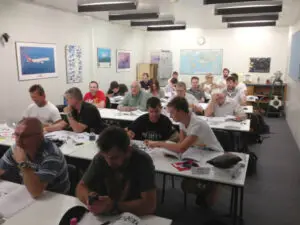
IREX
Bob Tait’s IREX book is the dedicated study guide for pilots preparing for the Instrument Rating Examination, covering the advanced knowledge required to plan and conduct IFR operations safely and confidently. It explains instrument procedures and IFR decision-making in clear, practical language, with an exam-focused structure that supports efficient study and revision. Whether you’re building your IFR foundation or polishing your knowledge before the exam, the IREX book is designed to help you understand the “why” behind IFR procedures and perform strongly in the CASA IREX exam.
E-Texts
This E-Text subscription gives you 12 months access to the following features:
- Full-Text Searching: the E-Text viewer gives a list of all instances of your search term throughout the entire book and highlights them for you.
- Bookmarking: save links to pages within the text to build up a collection of sections you found particularly important.
- A fully up-to-date Textbook: the text is updated whenever a new version is released. No more worrying whether your version is accurate. If it’s on-line, it’s the latest edition.
The E-text can also be easily accessed using your favourite mobile device. That makes this an ideal choice for students always on the go.
This E-text is a single use product no copying or sharing is permitted.
Instant Access available with 
Bob Tait’s IREX E-Text gives you a flexible, digital way to prepare for the Instrument Rating Examination, with 12 months online access to the latest up-to-date edition. Study anywhere on your computer, tablet or mobile device and use built-in tools like full-text search (find and highlight every instance of a term across the book) and bookmarking to save key sections for quick revision.
An internet connection is required while reading (Wi-Fi recommended; mobile data charges may apply). Single-use access only—no copying or sharing permitted.
If you have already purchased this item please click on the Bob Tait LMS in the header to Access your product.
Please note that once your purchase for a Combo deal has been made, your order can only be processed via the office during business hours (8.00am – 4.00pm weekdays)
Get the complete study setup with the Bob Tait IREX Package—a printed hard copy for highlighting and desk study, plus 12 months access to the matching E-Text for study anywhere. The E-Text includes full-text search (with highlighted results), bookmarking, and is automatically kept up to date whenever a new edition is released, so you’re always using the latest version. Access it on computer, tablet or mobile (internet connection required; data charges may apply).
Single-use E-Text access only—no copying or sharing permitted.
Practice Exams
Bob Tait’s IREX Pilot Exam Preps (Practice Exams) are designed to build the two things that matter most for IREX success: strong theory knowledge and reliable exam technique under time pressure. Each module gives you realistic, CASA-style practice with randomised exams drawn from a large question bank—so every attempt feels fresh and helps you identify gaps before the real thing.
Complete open practice exams at your own pace, then test yourself with a timed exam in one sitting to simulate real exam conditions. After each attempt you can review your results and answers, making it easy to learn from mistakes, improve speed and accuracy, and walk into the IFR exam with confidence.
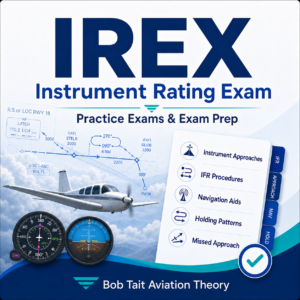
The IREX Exam Prep gives you a realistic preview of what to expect in the CASA exams, with four online practice exams written to a standard comparable to the aerodynamics questions used by CASA exams.
You’ll receive three untimed exams to complete at your own pace, plus one timed exam that must be finished in a single sitting once started—ideal for sharpening both knowledge and exam technique under pressure. Each exam can be submitted once, with the ability to review your results as often as you like during your enrolment period.
Additional exam attempts are available for purchase via the online store.
Video Classroom Lectures
If you can’t commit to the full-time course, our Video Lecture Series offers a flexible way to keep progressing. Study at your own pace, pause and replay lessons as needed, and take the time to review concepts before moving on. You can purchase individual topics or enrol in the complete course.
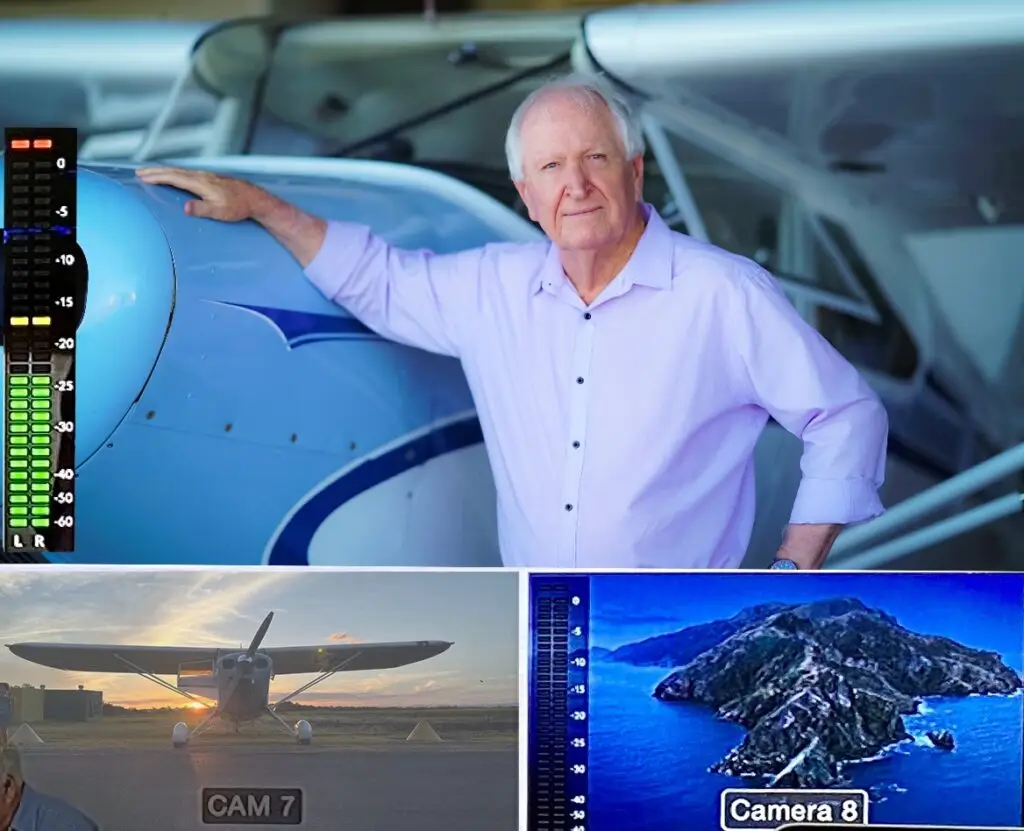
The IREX Video Lecture series contains many hours of video material to help you prepare for the IFR theory exam.
IREX Video Breakdown
These IREX ground school videos are now available for purchase through our on-line shop.
You can purchase individual subject blocks, or choose the complete IREX ground school package, which includes the video lectures, exam preparation quizzes and practice exam access.
All online video purchases provide 3 months access from the date of purchase.
For assistance, please contact us at bobtait@bobtait.com.au or call 0493 385 101.
Videos $50 for each individual topics,
or the Complete Series for $750 which includes a Free subscription to the Exam Preps.
-
Full IREX ground school and exam preps $750.00
The complete IREX online ground school is designed for students preparing for the CASA Instrument Rating Examination who are unable to attend a face-to-face course, or who prefer to study at their own pace. This package gives you access to the full set of IREX ground school video lessons, covering the key knowledge areas required for the instrument rating theory exam. The course is designed to guide you through the subject in a structured way, helping you build understanding before moving into exam-style preparation. The package also includes access to our IREX exam preparation quizzes and practice exam material, allowing you to test your knowledge, identify weak areas and prepare more confidently for the CASA exam. Also included is access to our online support forums, where you can ask questions and receive help from experienced aviation theory instructors and subject matter specialists from around Australia. Access is valid for 3 months from the date of purchase.
-
Topic 1: Introduction $50.00
Radio waves (frequency, wave length. frequency bands, characteristics. Ground waves. Sky waves. The VHF navigation aids. NDB/ADF. Interpretation of the NDB. Errors and Limitations of the NDB. Rated coverage of the NDB.
-
Topic 2: ADF orientation $50.00
ADF exercises off the ERC. Track error and drift. ADF intercept of track. Using an off-track NDB. Sample exam-type ADF question. More advanced ADF orientation questions. Examples of more advanced questions. The VOR
-
Topic 3: RNAV $50.00
What is RNAV? Inertial Navigation (INS). VOR/DME area nav. Satellite navigation (Global navigation satellite systems (GNSS). Geostationary Satellites. What is IFR navigation? Navigating with ground based aids. Visual approaches.
-
Topic 4: Part 1 TSO Requirements $50.00
Part 1 questions. GPS TSO requirements (129 and 145/6). Navigation instruments for Private and Air Transport flights. Performance based navigation (PBN RNAV. RNP. Autopilot. requirement.
-
Topic 5: Pre-TAKE OFF $50.00
Pre take-off altimeter serviceability checks. Weather radar. The IFR pilot (ratings and endorsements). An introduction to types of instrument approaches. 2D and 3D. Reversal procedures
-
Topic 6: Legal requirements $50.00
The instrument rating (duration and endorsements). Recency and renewal requirements. Single pilot recency. Check list for recency. Night VFR requirements. Flight notification. The validity of a TAF. Selection of an appropriate route.
-
Topic 7: Revision Questions $50.00
Revision questions and answers. Provision of alternates. Planning to an aerodrome with no instrument approach. Navigation aid requirement (Private and Air Transport). Cloud and visibility requirement. Special alternate minima. Wind requirement.
-
Topic 8: Alternates $50.00
Requirements for aerodrome lighting. Thunderstorms. Holding requirements. Changes (FM) and Variations (INTER and TEMPO). Check list for the provision of alternates (Alternates Could Very Well Prove Life Savers). TAFs and TAF3.
-
Topic 9: Fuel Requirements $50.00
Fuel requirements for IFR. Understanding controlled airspace. Preferred routes in CTA (ERSA PFR). Examples of preferred routes.
-
Topic 10: Operating procedures $50.00
Frequency changes. Departures into IMC. Qualifying and non-qualifying aircraft. Considering an engine failure in a multi-engine aircraft. Climb and cruise procedures (climb VFR, VFR on top). Track keeping. Circling area.
-
Topic 11: Uncontrolled Aerodromes $50.00
Departure from an uncontrolled airport (continued). Departure from a controlled airport. Calculating the climb gradient. Standard Instrument Departures (SID).
-
Topic 12: Revision Questions $50.00
Exercise questions and answers. Departure and tracking requirements. Example of a departure from an uncontrolled aerodrome.
-
Topic 13: Revision Questions $50.00
Exercise questions and answers. Visual approach at night. DME or GPS arrivals (DGA). Descent below MDA (day and night).
-
Topic 14: Various $50.00
Visual approach at night. DME/GPS arrivals (DGA). More on the 2D approach. Initial, Intermediate and final sectors (speed and tracking restrictions).
-
Topic 15: Final topic $50.00
The standard holding pattern. Sector entries. Missed approach point. RNAV/GNSS segments and missed approach. The 3D approach (ILS). Decision Altitude. ILS minima. Flight director. Auto pilot coupled approach.
Course Dates for IREX in 2026/2027
| COURSE | START DATE | FINISH DATE | FACIILITATOR |
|---|---|---|---|
|
IREX # 1 |
5th APRIL 2027 (08:30 est) |
16th APRIL 2027 (15:30 est) |
Capt. John Adams |
|
IREX # 2 |
12th JULY 2027 |
23rd JULY 2027 |
|
|
IREX # 3 |
9th NOV 2026 |
20th NOV 2026 |
|